












Sleep is a fundamental pillar of physical, mental, and metabolic health.
However, 30 to 50% of adults report suffering from at least one sleep disorder, and 15 to 20% have insomnia characterized according to strict criteria.
Chronic fatigue, difficulty concentrating, irritability, increased risk of anxiety or depression: the impact is real.
In this context, melatonin is often presented as a solution. But it is also sometimes criticized or misunderstood.
Myths & Realities about Melatonin
Myth #1: "Melatonin is a sleeping pill"
Melatonin does not directly induce sleep, unlike hypnotic medications. It does not cause forced sedation , but acts as a biological signal preparing the body for nighttime rest. It promotes sleep onset by supporting the natural sleep-wake cycle, without altering the physiological mechanisms of sleep.
It is important to distinguish melatonin from benzodiazepines, for example, which act on the central nervous system and alter sleep architecture.
Myth #2: "You can become addicted to melatonin"
Melatonin does not cause dependence . No phenomena of addiction, pharmacological tolerance or withdrawal syndrome have been observed.
However, it is important to distinguish between a habit of use (psychological habituation) and a physiological dependence , which does not exist with melatonin.
Melatonin does not cause addiction or dependence in the pharmacological sense.
Myth #3: "The higher the dose, the better you sleep"
That's incorrect. Effective doses are generally low, most often between 0.5 mg and 2 mg.
1 mg or 1.9 mg: how to choose?
- 1 mg : suitable for mild sleep onset difficulties or for occasional support.
- 1.9 mg : can be used when the desynchronization is more pronounced (working with staggered hours, jet lag, significant stress).
Furthermore, increasing the dose does not improve effectiveness and can lead to:
- residual drowsiness
- headaches
- disruption of the circadian rhythm.
The key remains lifestyle : exposure to natural light, reducing screen time in the evening, but also stress management.
Myth #4: "Melatonin is only for the elderly"
It is true that melatonin production decreases with age, particularly after 50–60 years.
However, it can also be relevant in adults:
- in cases of chronic stress
- night work
- time difference
- sleep-wake rhythm disorders
Is it recommended for children?
In children, melatonin should never be used as a form of self-medication . Furthermore, it is important to remember that melatonin supplements are not recommended for children without medical advice.
It should only be considered after rigorous implementation of sleep hygiene rules: regular schedules, appropriate diet, elimination of screens in the evening, calm and dark environment, stable routine.
The priority remains addressing environmental and behavioral factors. Melatonin is only used as a second-line treatment, within a strictly controlled framework.
Myth #5: "All you need to do is take melatonin to sleep well"
Melatonin does not correct an unbalanced lifestyle.
Melatonin synthesis depends primarily on the availability of tryptophan , as well as certain cofactors such as magnesium and vitamin B6 . Tryptophan, a precursor to melatonin, is an amino acid derived from proteins , whether of animal or plant origin. However, plant-based sources may require specific nutritional combinations or supplementation to meet their needs.
Foods rich in tryptophan :
- Eggs
- Pisces
- Poultry
- Almonds and walnuts
- Pumpkin seeds
- Legumes
- Dark chocolate (over 70%)
Its conversion also requires cofactors such as:
- magnesium
- vitamin B6
Without addressing environmental factors (stress, blue light, irregular rhythm), supplementation alone remains limited.
Everything you need to know about melatonin
What is the purpose of melatonin?
Melatonin plays a fundamental role in synchronizing the biological clock . It allows the body to clearly distinguish between wakefulness and rest phases, and to align many physiological functions with the day/night cycle (body temperature, hormonal secretions, alertness).
Its main function is to induce sleep :
- It reduces the time needed to fall asleep.
- it promotes a natural transition to sleep
- It contributes to the overall quality of nighttime rest
It is important to emphasize that melatonin does not artificially induce sleep . It prepares the body's biological environment for rest, without causing forced sedation, which explains its different tolerability profile compared to conventional sleeping pills.
Why might melatonin production decrease?
Several factors influence its secretion:
1. Age: Production gradually decreases and can drop significantly after 60–70 years.
2. Artificial light: Blue light inhibits secretion by sending a wakefulness signal to the brain.
3. Chronic stress : Prolonged activation of cortisol disrupts the circadian balance.
4. Jet lag and night work : They disrupt the internal biological clock.
What science says today
Clinical studies show that melatonin can:
- reduce the time it takes to fall asleep
- improve adaptation to jet lag
- supporting the regulation of circadian rhythm disorders
Meta-analyses confirm its usefulness in mild to moderate sleep onset disorders , with a good tolerance profile at physiological doses.
However, it is not a universal treatment for severe chronic insomnia. It is part of a comprehensive approach that includes lifestyle changes and stress management.
Key points to remember
Melatonin is neither a miracle sleep aid nor a magic solution.
It is a key hormone in the biological rhythm, whose effectiveness depends on:
- respecting natural cycles
- nutritional balance
- of the light exposure
- stress management
When used appropriately, at physiological doses, it can support sleep synchronization.
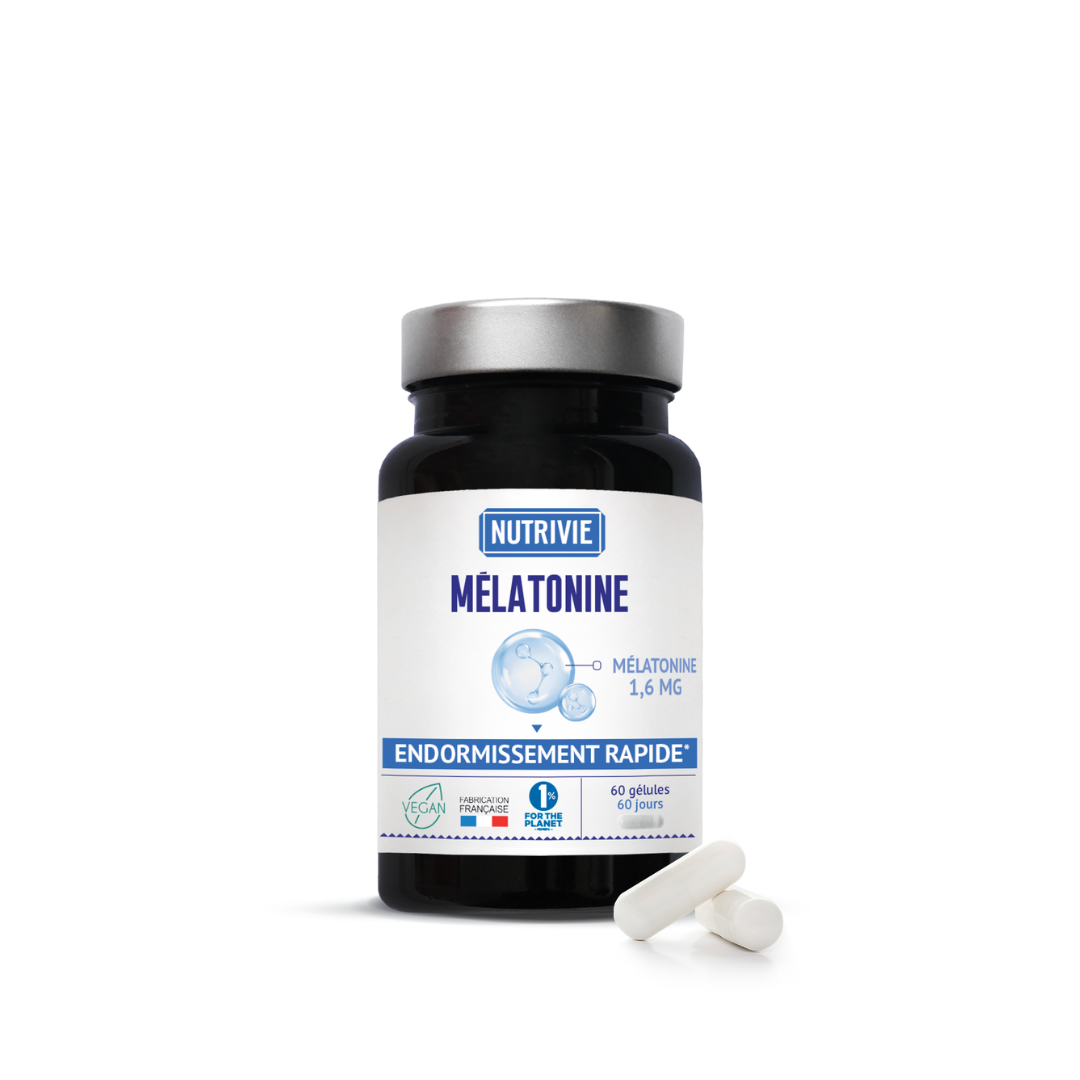
Nutrivie adopts this holistic approach, offering melatonin and magnesium- based formulas that respect the body's natural mechanisms, with controlled dosages and a rigorous selection of ingredients. Regarding dosage, the approach should remain personalized. A 1 mg dose may be sufficient for mild difficulty falling asleep or for occasional support . A 1.9 mg dose can be considered when the disruption is more pronounced , particularly in cases of shift work, jet lag, or significant stress.
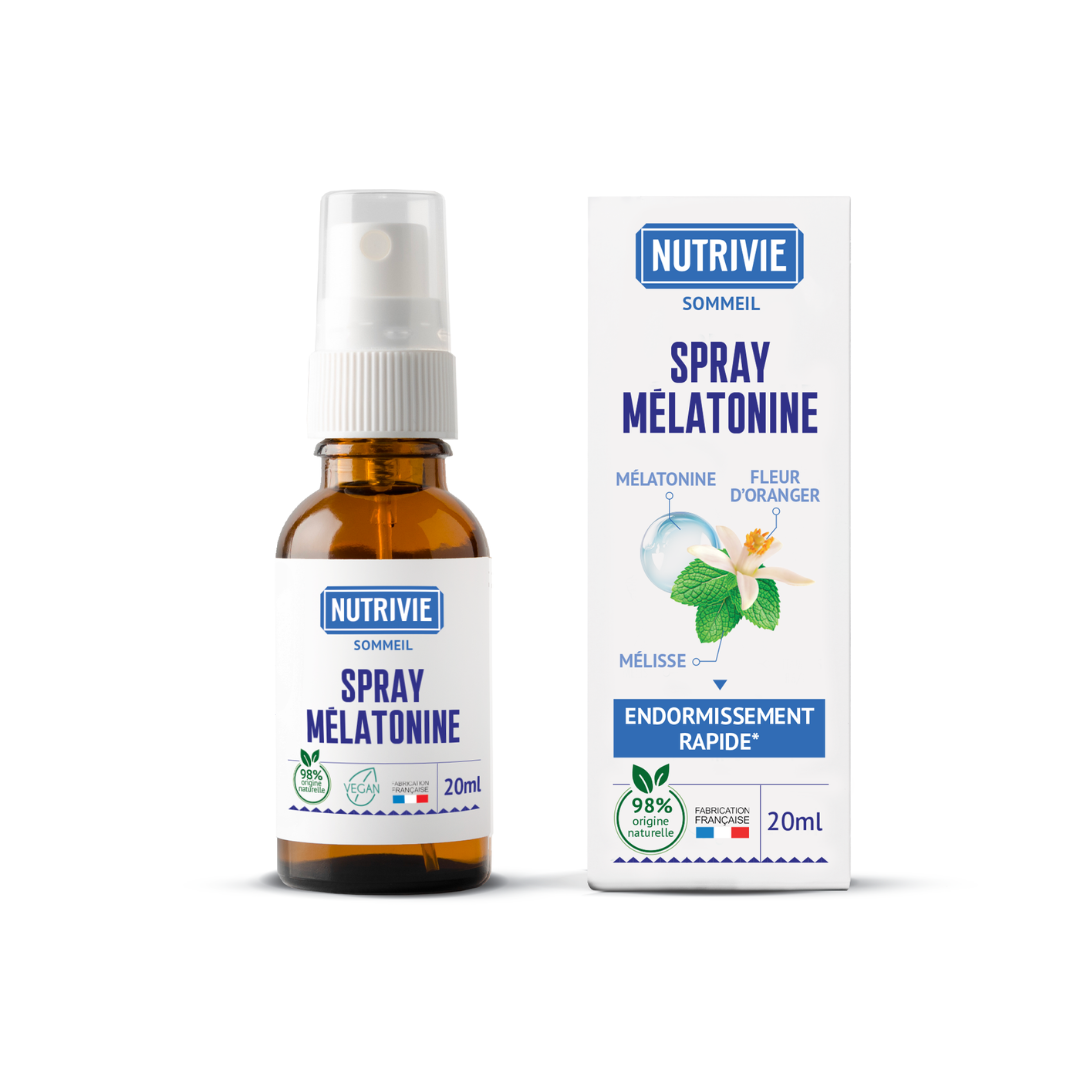
Nutrivie offers two distinct sprays corresponding to these dosages, allowing the support to be adapted to the specific needs of each individual, while respecting the physiology of sleep.
Melody RENOM
Naturopath and founder of the Magnolia Holistic Formations school